🔬 Laboratory Facilities – Department of Pathology & Microbiology
“Where Observation Meets Diagnosis”
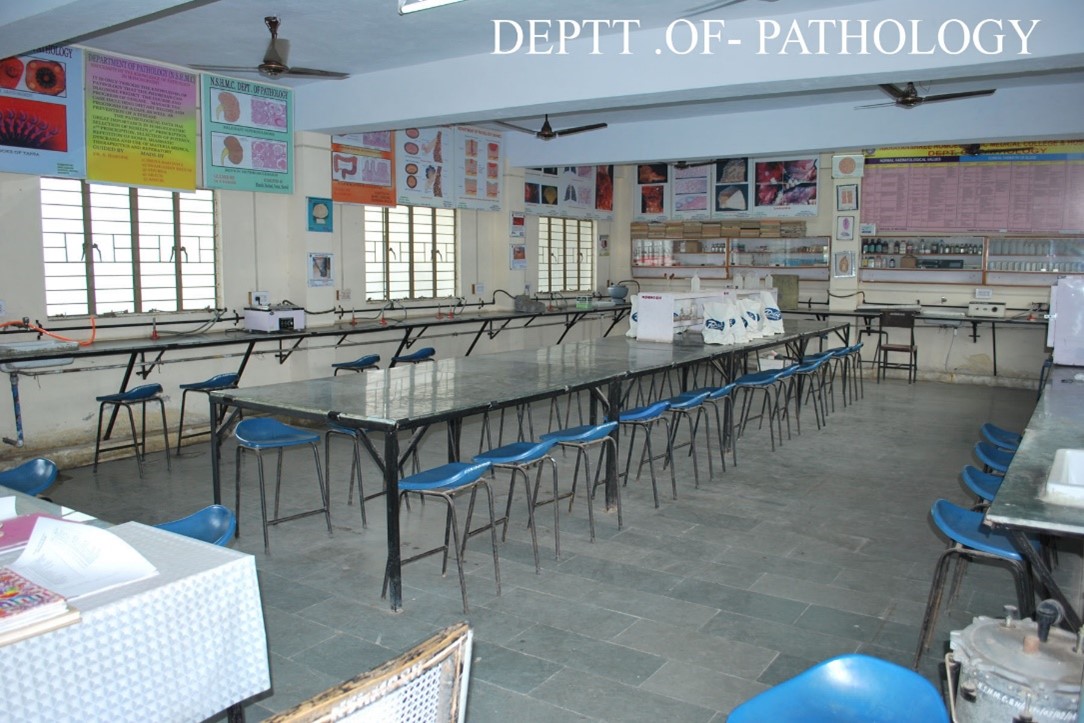
The Pathology & Microbiology Laboratory at Narayanshree Homoeopathic Medical College (NSHMC) is equipped with modern facilities that enable students to gain hands-on experience in the study, identification, and analysis of diseases and microorganisms. The laboratories serve as vital learning environments where theoretical knowledge is transformed into practical diagnostic skills.
The Pathology Laboratory is furnished with microscopes, slides, tissue specimens, charts, and histological equipment that help students examine the structural and cellular changes associated with various diseases. Students learn essential laboratory techniques such as blood analysis, urine examination, and cytological studies, which form the foundation for accurate diagnosis and clinical correlation.
The Microbiology Laboratory provides facilities for the cultivation, staining, and identification of microorganisms, including bacteria, fungi, and parasites. Equipped with incubators, autoclaves, laminar airflow units, and culture media, it allows students to study infection control, sterilization, and antimicrobial sensitivity testing.
Regular demonstrations, guided practical sessions, and diagnostic workshops ensure that students develop precision, critical observation, and laboratory discipline. The department emphasizes both scientific rigor and safety, fostering confidence in performing diagnostic procedures and interpreting results accurately.
Through these facilities, students gain a strong foundation in disease diagnosis and microbial analysis, preparing them to contribute effectively to clinical practice, research, and public health — all while upholding the integrative spirit of homeopathic education.